
A project against antisemitism – since 2014
Israel, We Stand With You
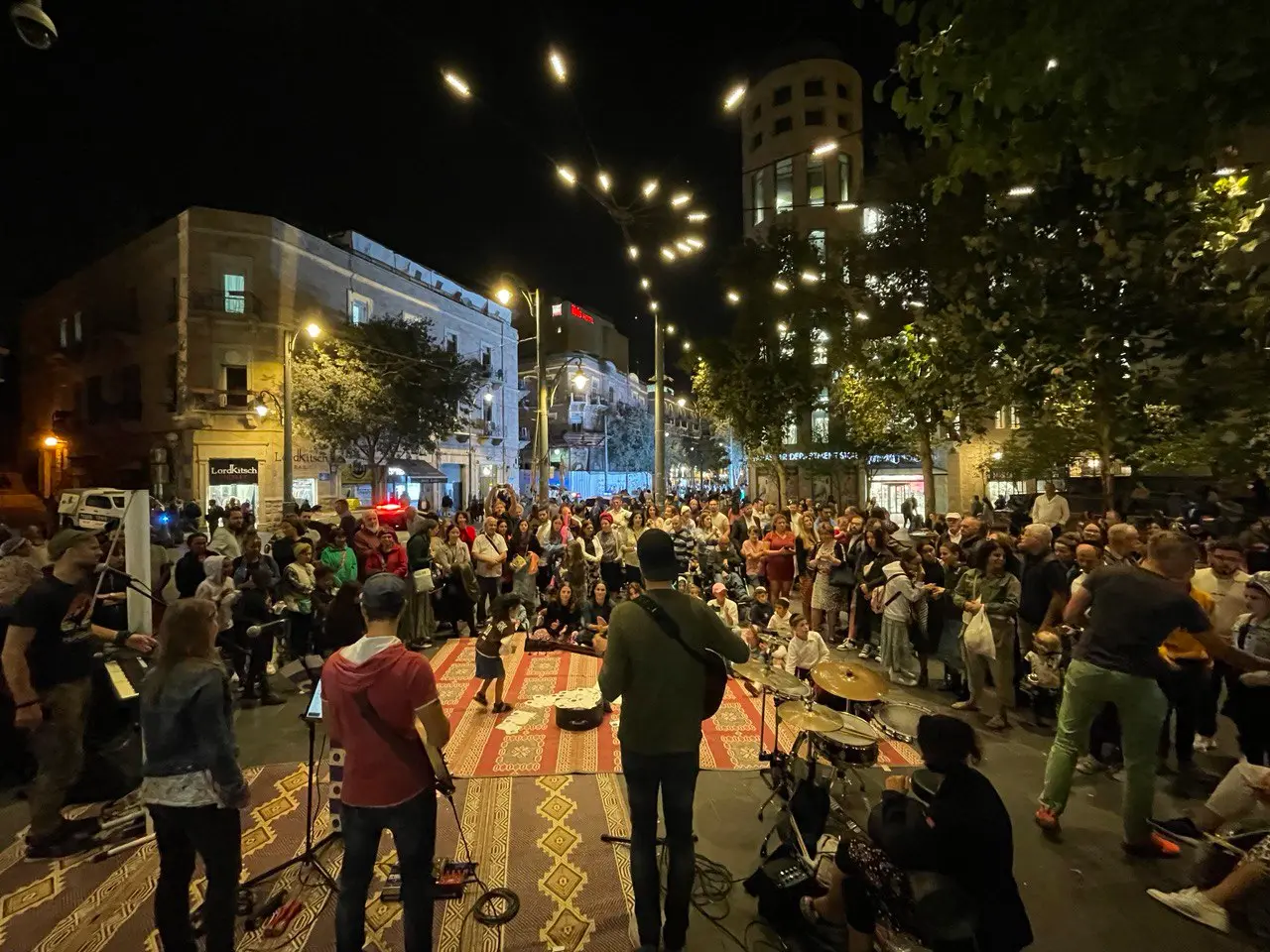
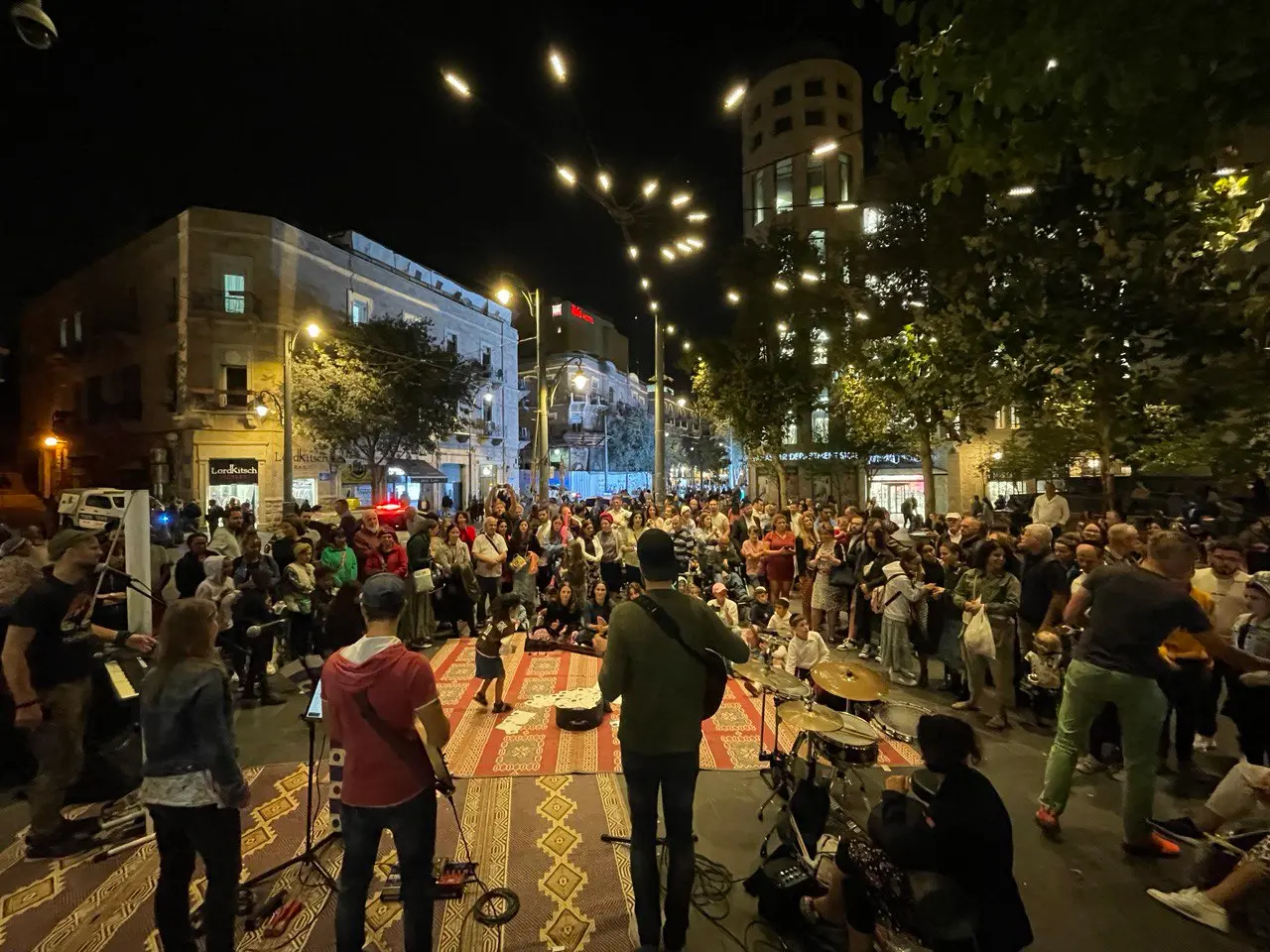
People dance. They cry. They laugh. They sing. And friendships are born.
Since 2014 we have been travelling to Israel, setting up our instruments in the pedestrian zones and singing in Hebrew. As Germans. Not to receive anything – but to build friendships and to say: we stand with you.
Why we do this
Antisemitism is growing.
We stand against it.
Not only in Europe but worldwide, hatred of Jews is on the rise again – openly, audibly, in the street. You can write statements against it. Or you can go and stand next to the people it is aimed at.
We chose the second. A statement against antisemitism carries more weight when Germans are the ones making it – countless people have told us so since 2014. Some said we were the first Germans they had ever met. And then they cried.
My father was the only survivor – all the other family members were killed by the Nazis. For a long time I used to say that my father is the greatest victory over the Nazis. But today, seeing these musicians here, them and us together, I say: this is the greatest victory over the Nazis.
What we do
Music, postcards – and above all, listening
It began in May 2014. Marcus was standing at the Western Wall with his wife Karolina and asked himself: how can we serve this people – and, in these hard days, strengthen their trust in the God of Abraham, Isaac and Jacob? A few months later we were on Ben Yehuda Street in Jerusalem with our instruments, battery-powered amps and a stack of hand-written postcards. It is still our favourite spot – though we have since played in Tel Aviv, Haifa, Ashkelon and Tiberias too. And gone through thousands of batteries along the way.
Songs in Hebrew
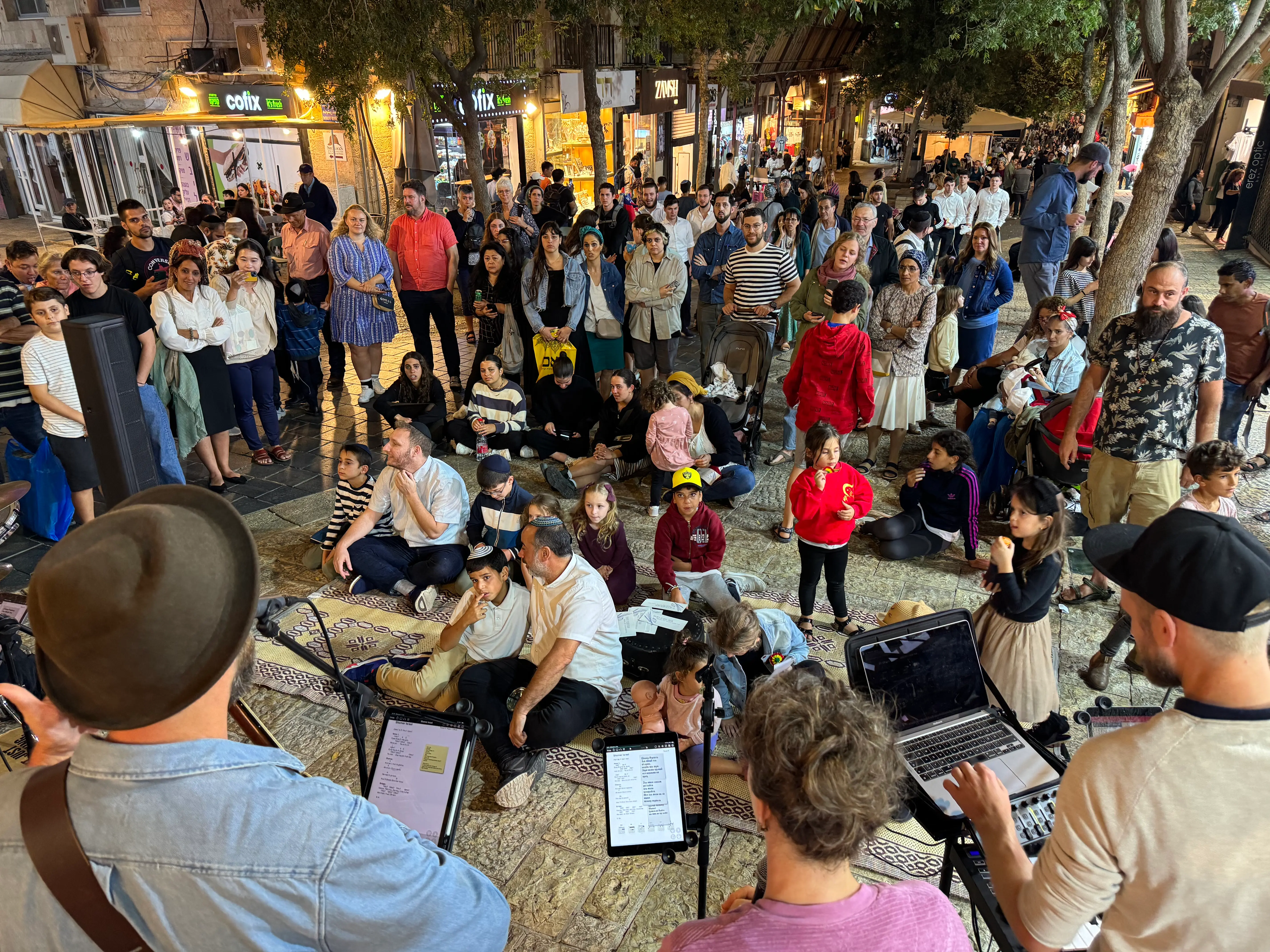
We sing psalms in the language of the country, set to our own melodies: “Adonai ro’i, lo echsar” – the Lord is my shepherd. Or Psalm 121: “Behold, he who keeps Israel will neither slumber nor sleep.” We started without a word of Hebrew: we learned the texts from rabbis on YouTube, syllable by syllable. By now some of the team are studying the language properly.
A drum instead of a hat
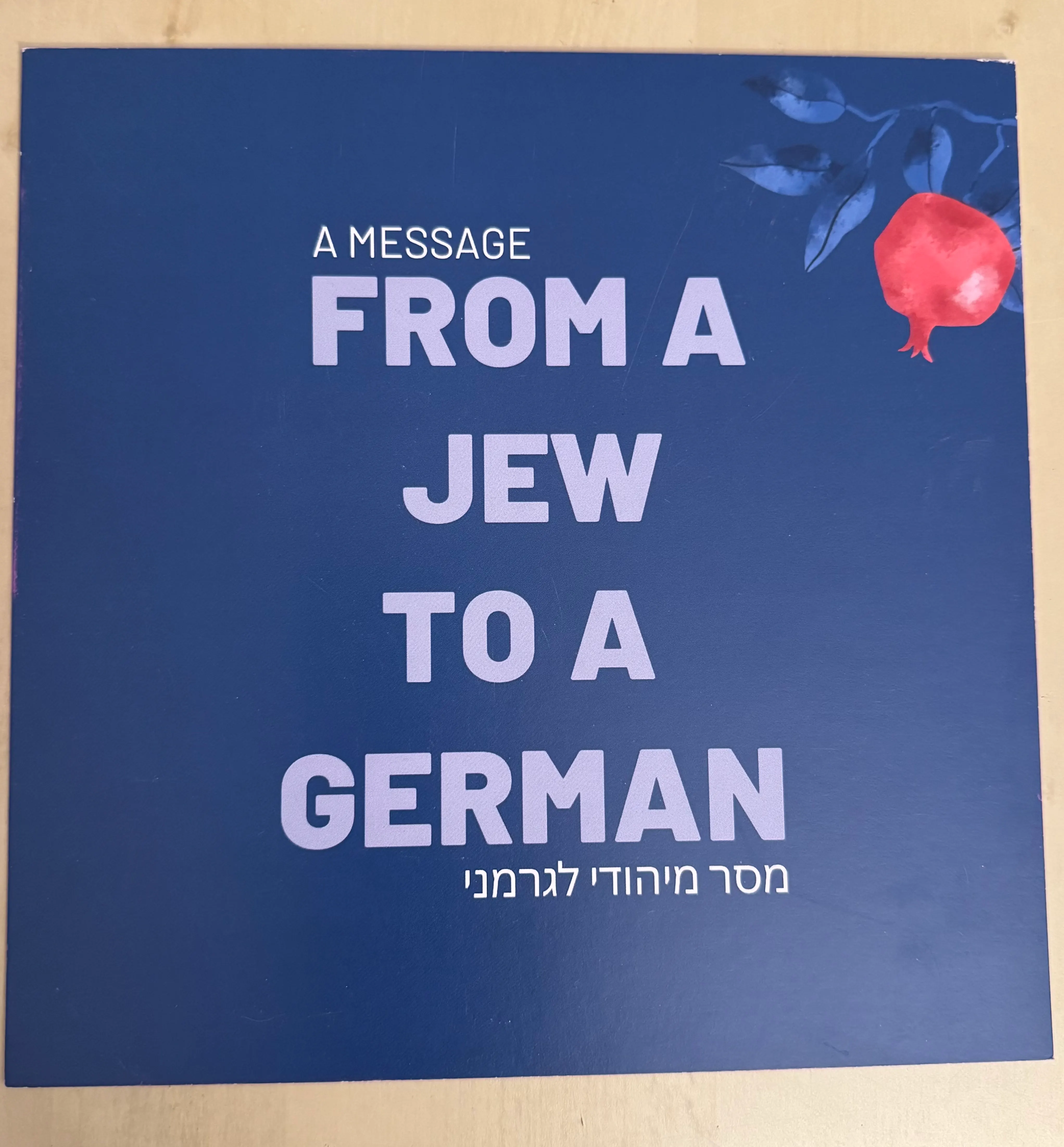
Where street musicians usually put out a hat for coins, we put out a drum full of postcards. We have handed out more than 30,000 hand-written cards this way, in a new design every year. “Put it on your fridge,” we say, “and every time you see it, remember that there are people in Europe standing with you.” Some people tell us they already have three of them up there. If someone leaves money in the drum, we give it back: we did not come to take anything.
Listening
The most important part happens once the instruments are packed away. People stay and talk. Over the years, many of these encounters have turned into friendships – with secular, orthodox and ultra-orthodox Jews, and with Arabs. After October 7 we mostly did one thing: we called people and listened.
And since 2025: blank cards
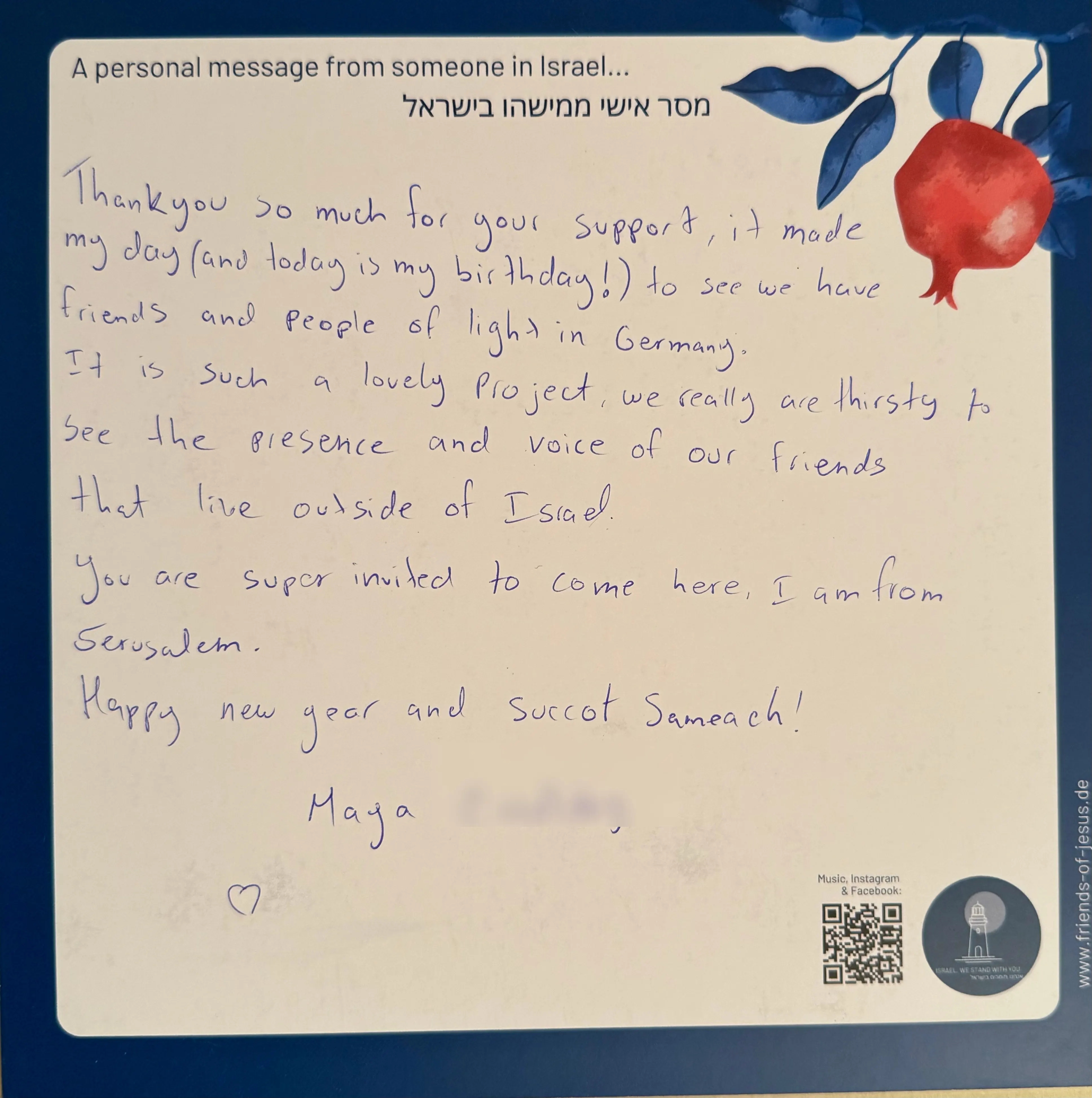
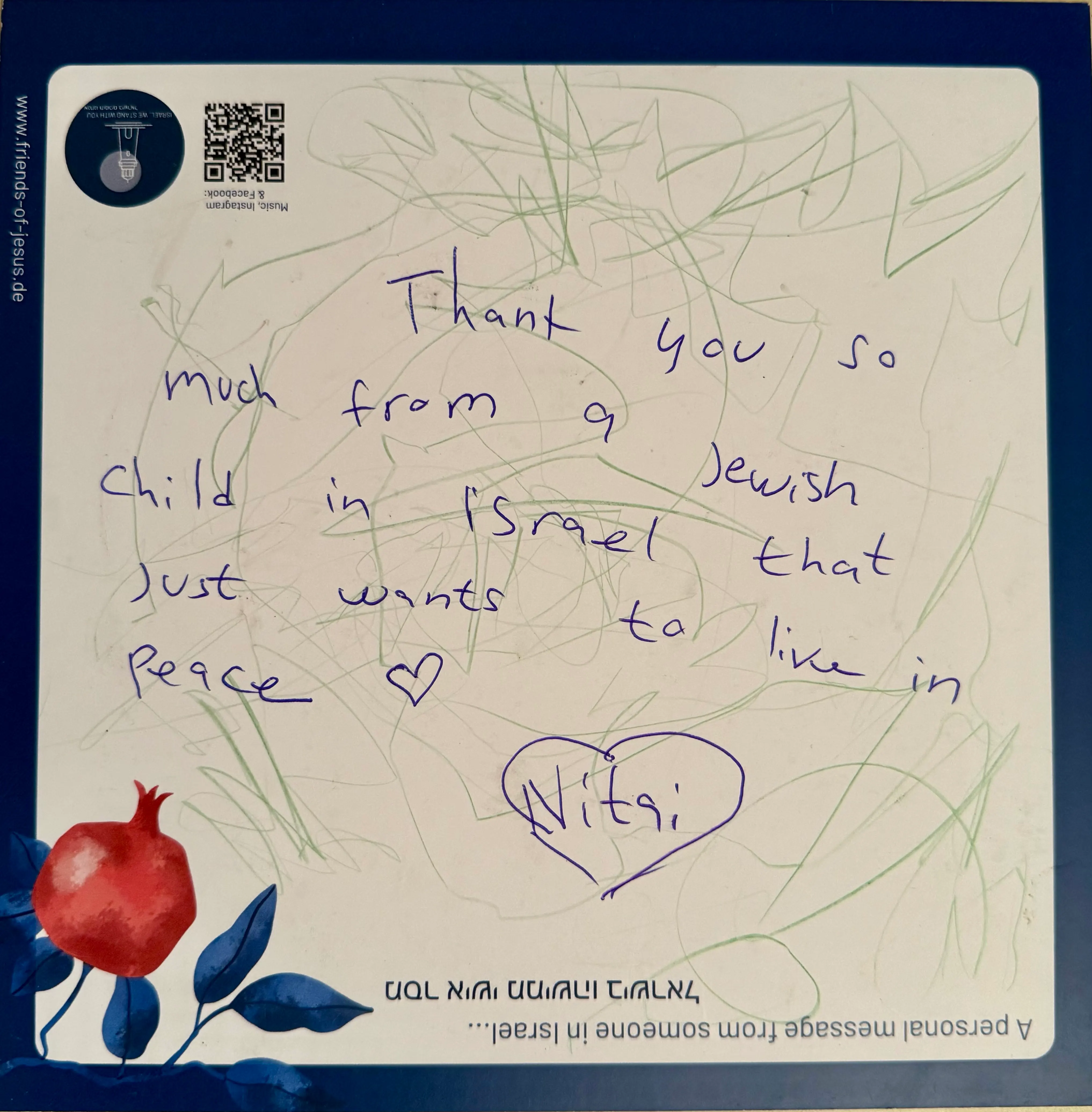
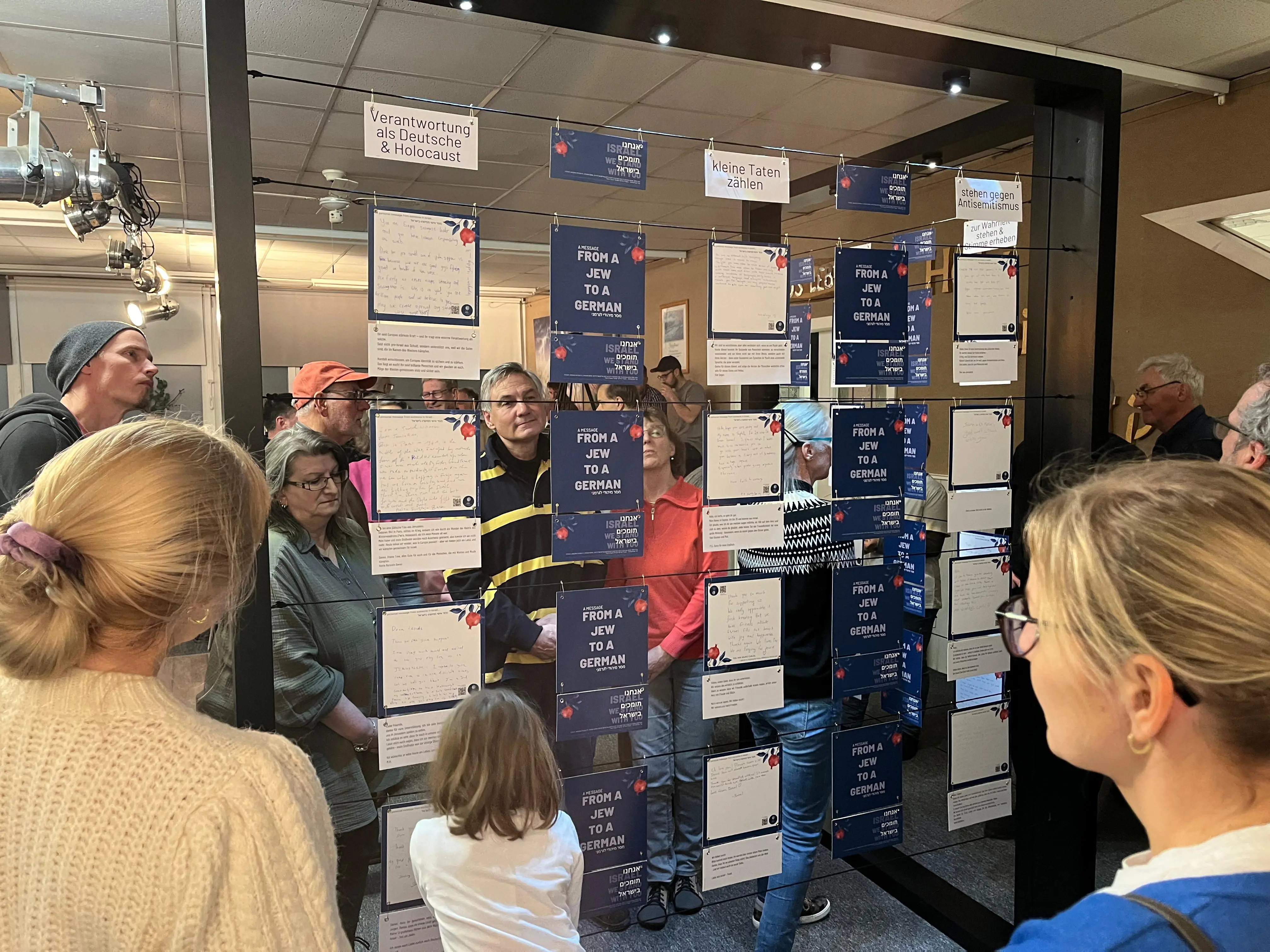
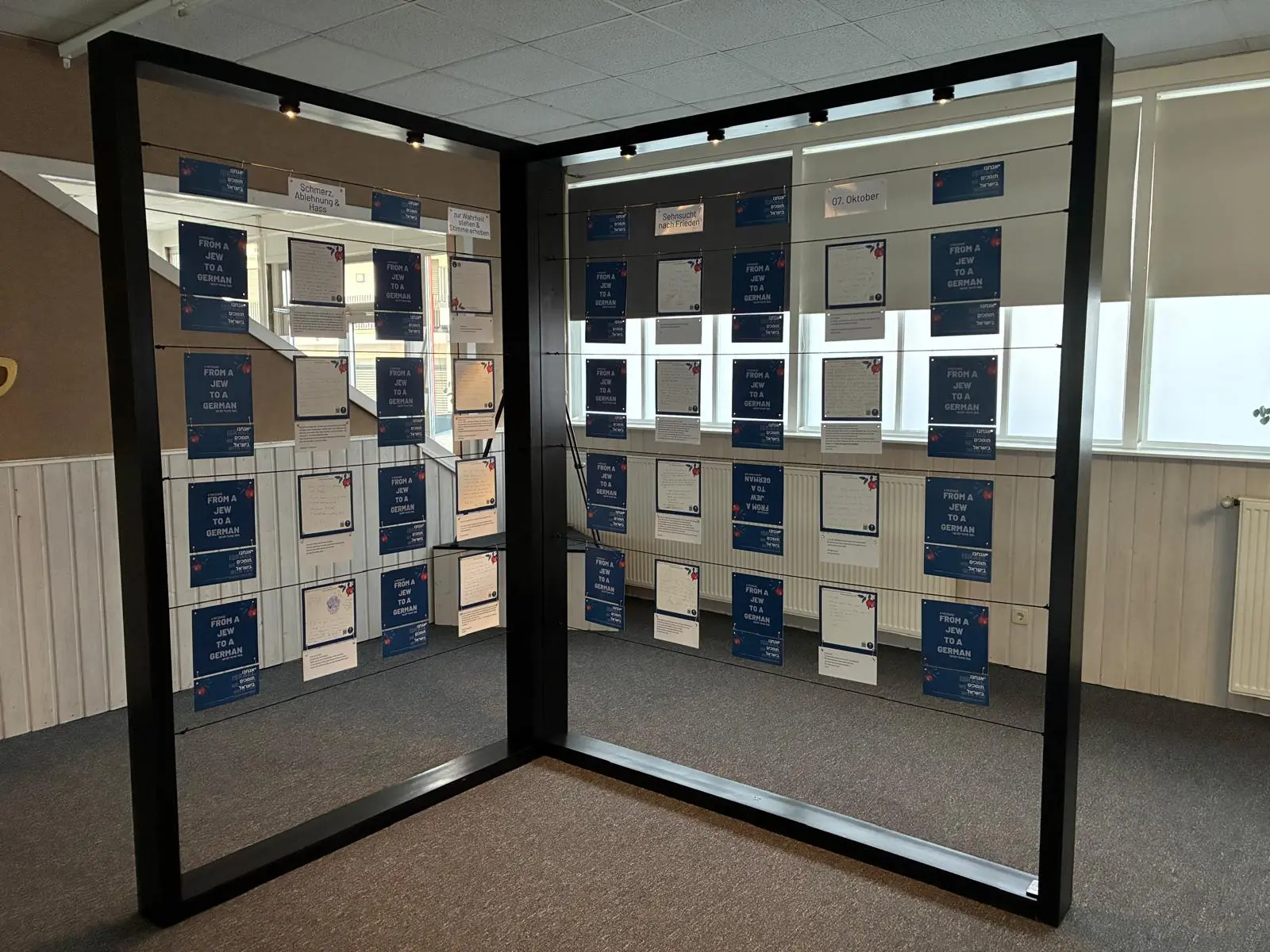
Among the written postcards there are now blank ones too. Anyone who wants to takes one and writes down whatever is on their heart – a question, a thought, a complaint. We promise only one thing in return: it will be read. By Germans, by Europeans.
We bring the written cards home with us. We show them at events and in exhibitions, grouped by theme – responsibility, pain, the longing for peace. So that those sentences arrive where they belong.
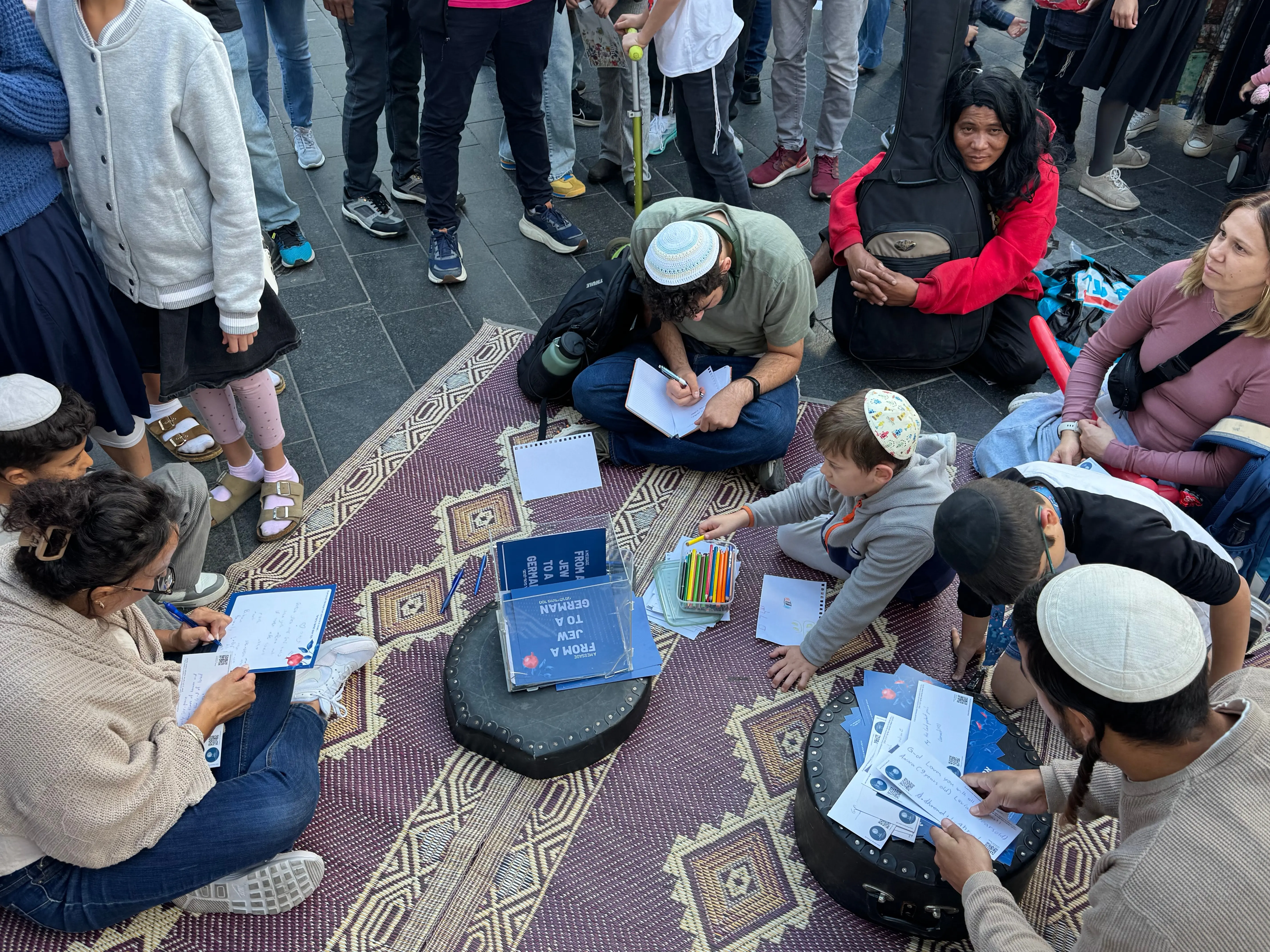
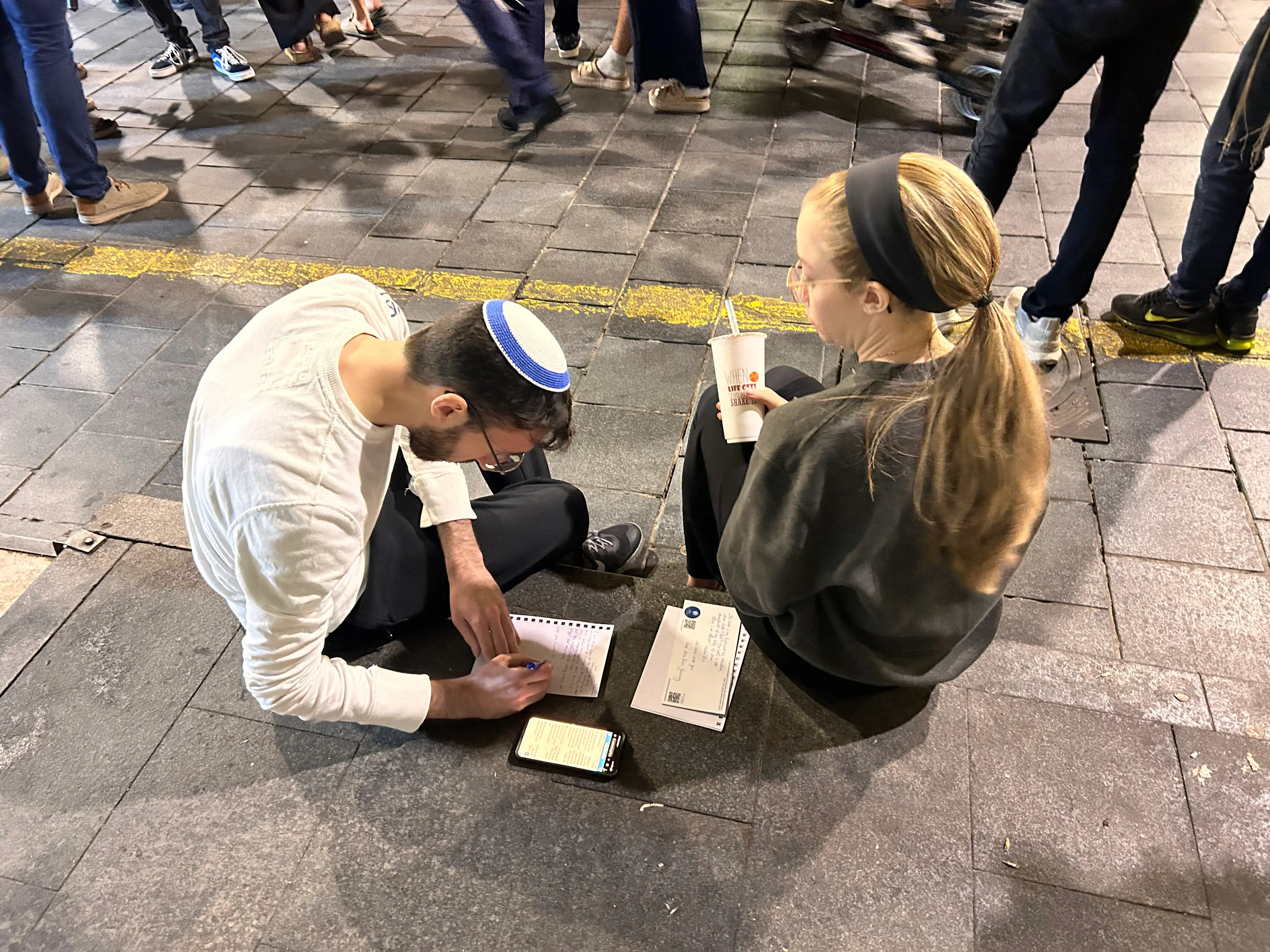
In the first year alone, around 200 personal messages travelled back to Germany with us.
And sometimes the street goes quiet
Between two songs on Ben Yehuda Street, Marcus sometimes tells this story:
My wife and I had been married for five years. Two doctors had told us we would probably never have children. After one of our first trips here we came home – and my wife was pregnant. Our daughter’s name is Anna.
Then we sing Psalm 113: “He gives the childless woman a family, making her a happy mother.” In a country where children mean everything, nothing more needs to be said. Usually someone applauds. Once someone called out “Hallelujah”, another “God bless you”.
Invited in
And suddenly you are standing
in their living room
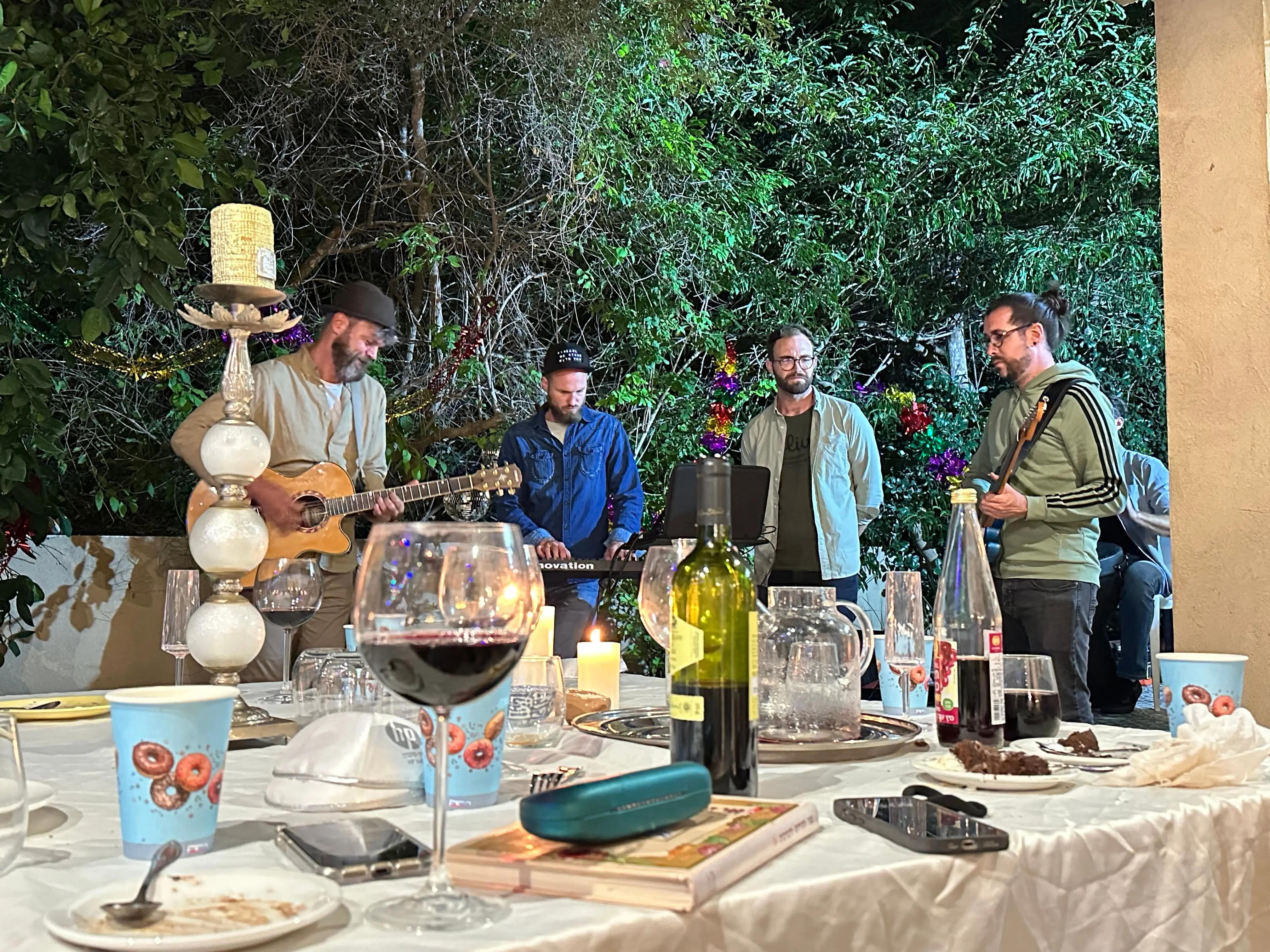
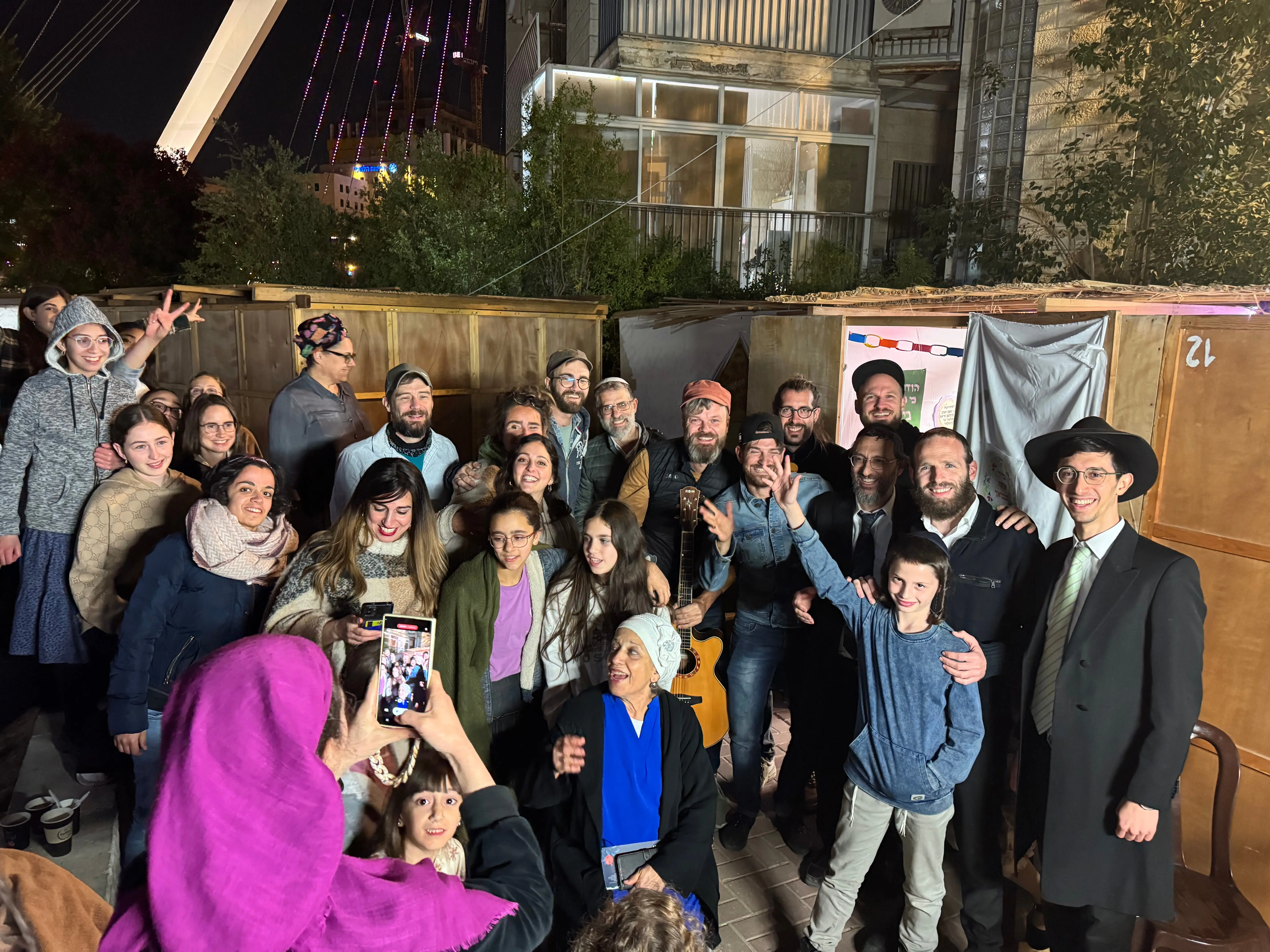
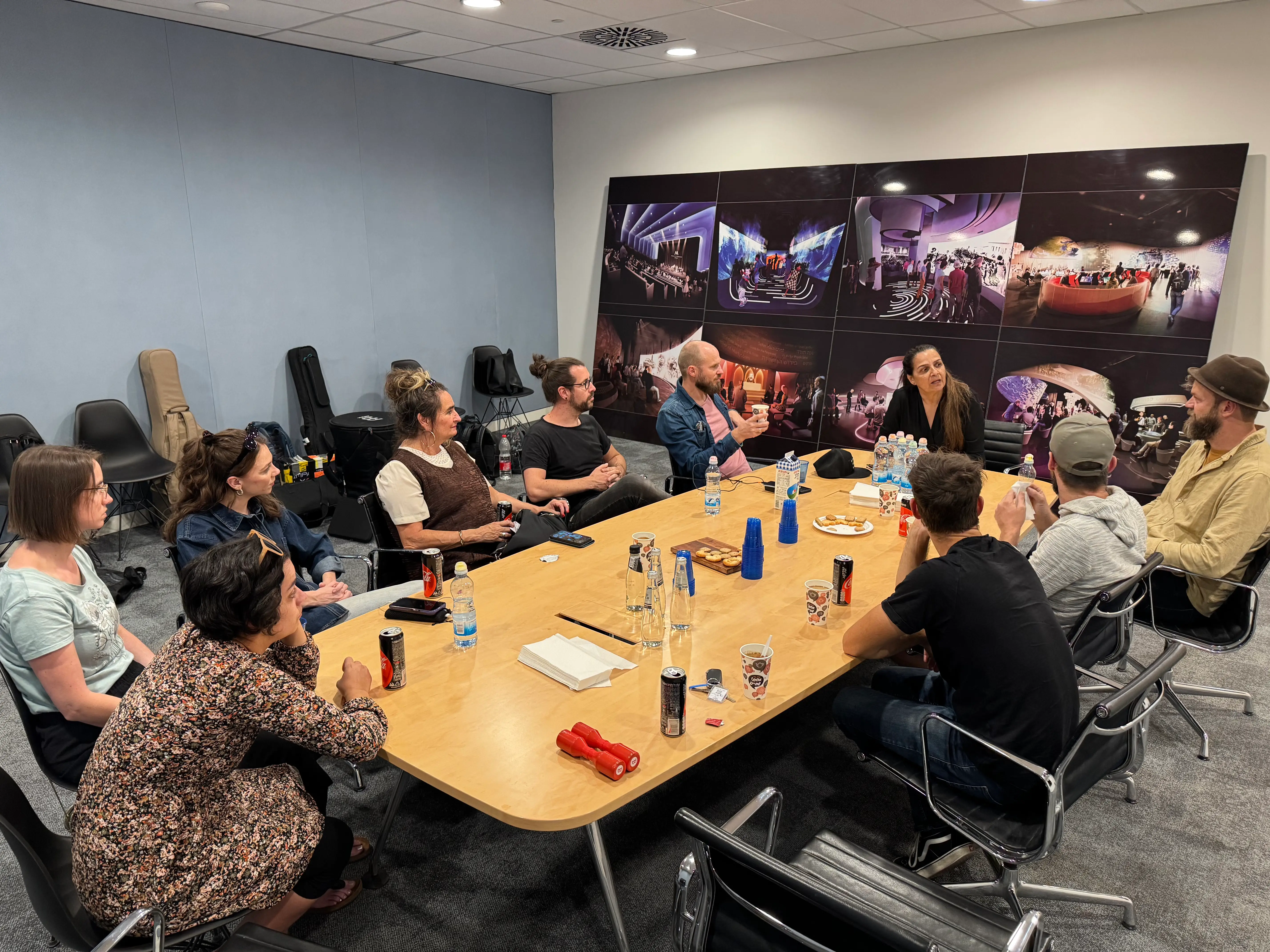
It happens on every trip: someone stops in the street, listens, gets talking – and invites us home. Into flats, to long tables, into the sukkah in the courtyard.
We sit together for hours. With secular families and ultra-orthodox ones, with people who had never shared a table with Germans before. There is food, there are questions, stories, laughter.
These are the hours in which an encounter turns into a friendship. Many of them have lasted for years now.
Beyond the street
What begins in Jerusalem
does not end there
Bringing people along
We are usually ten to fourteen people. About half of us play music. The other half stand alongside and talk – with passers-by who stop, who have questions, who want to know why of all people Germans are standing here singing in Hebrew.
You do not need to be a musician to come along. The conversation on the pavement matters as much as the song.
And everyone who has come with us returns changed. The picture you form of this country from a distance does not survive the encounter.
Telling the story back home
What we experience in Israel, we bring back with us. We give talks – sometimes with music, sometimes as an evening of storytelling, sometimes as a conversation or interview. And we run workshops.
We tell this story to Christians, to people of no faith – and to Jewish audiences. The same story to all three.
Because what we say on the street in Jerusalem, we also say here: at our workplaces, in our towns, to people who have never met a Jewish person.
Impressions
Year after year, street after street
Mostly in Jerusalem, often around the Feast of Tabernacles, sometimes in Tel Aviv, Haifa, Ashkelon or Tiberias. People stop, children dance, someone starts singing along.
Who we are
People with ordinary jobs,
spending their holidays on this
We come from all over Germany – young and old, some with us since the very first trip, others coming for the first time. The starting point is Altenkirchen, a small town in western Germany: home of Friends of Jesus, the Christian church the project grew out of. That is how we know each other, and where the music comes from. We take time off work for these trips and cover most of the costs ourselves.
This is a German project. When we stand in Jerusalem as Germans and say, “We stand with you,” our history gives those words particular weight. But friends from England, the Netherlands, Ukraine and Poland have travelled with us too.
October 7, 2023
That morning,
we were there
We had been playing in the street for a week and were due to fly home on October 7. Early that morning a phone call woke us: a friend we had met in the street years before. “Are you safe? Stay safe.”
Everyone is affected somehow. The country is so small, everyone knows someone.
The days that followed
We were in Jerusalem, about 100 kilometres from where it happened. Our flight was cancelled. We were stuck. And during those days we went out into the street once more and played – for the few people still out. Those moments led to profoundly personal encounters. Days earlier the streets had been full of families, children, dancing and laughter. Now they were empty.
25 hours at sea
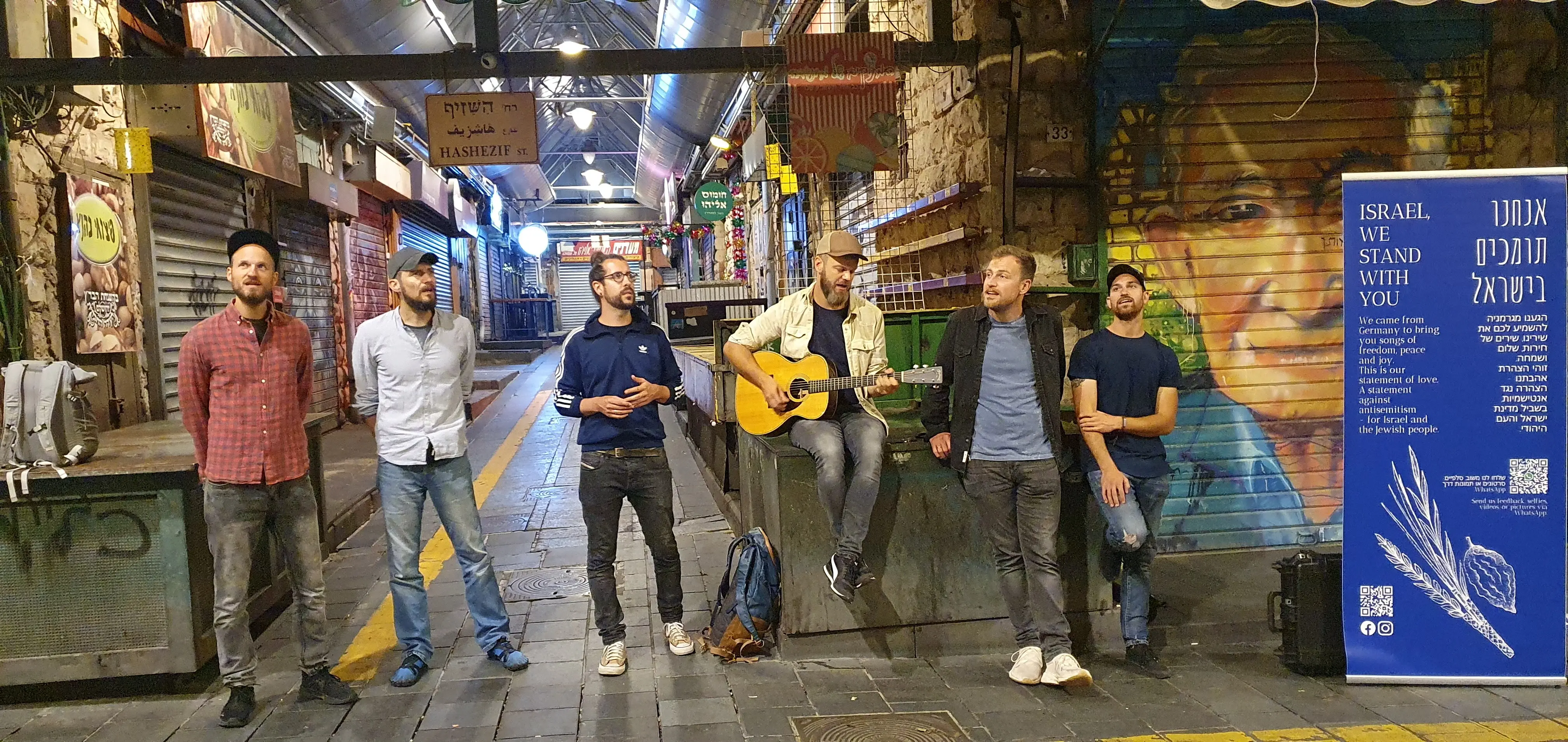
After several days we heard of a Swedish sailing ship anchored off Akko. We drove north at night, crossed to the ship by dinghy and reached Cyprus after 25 hours at sea.

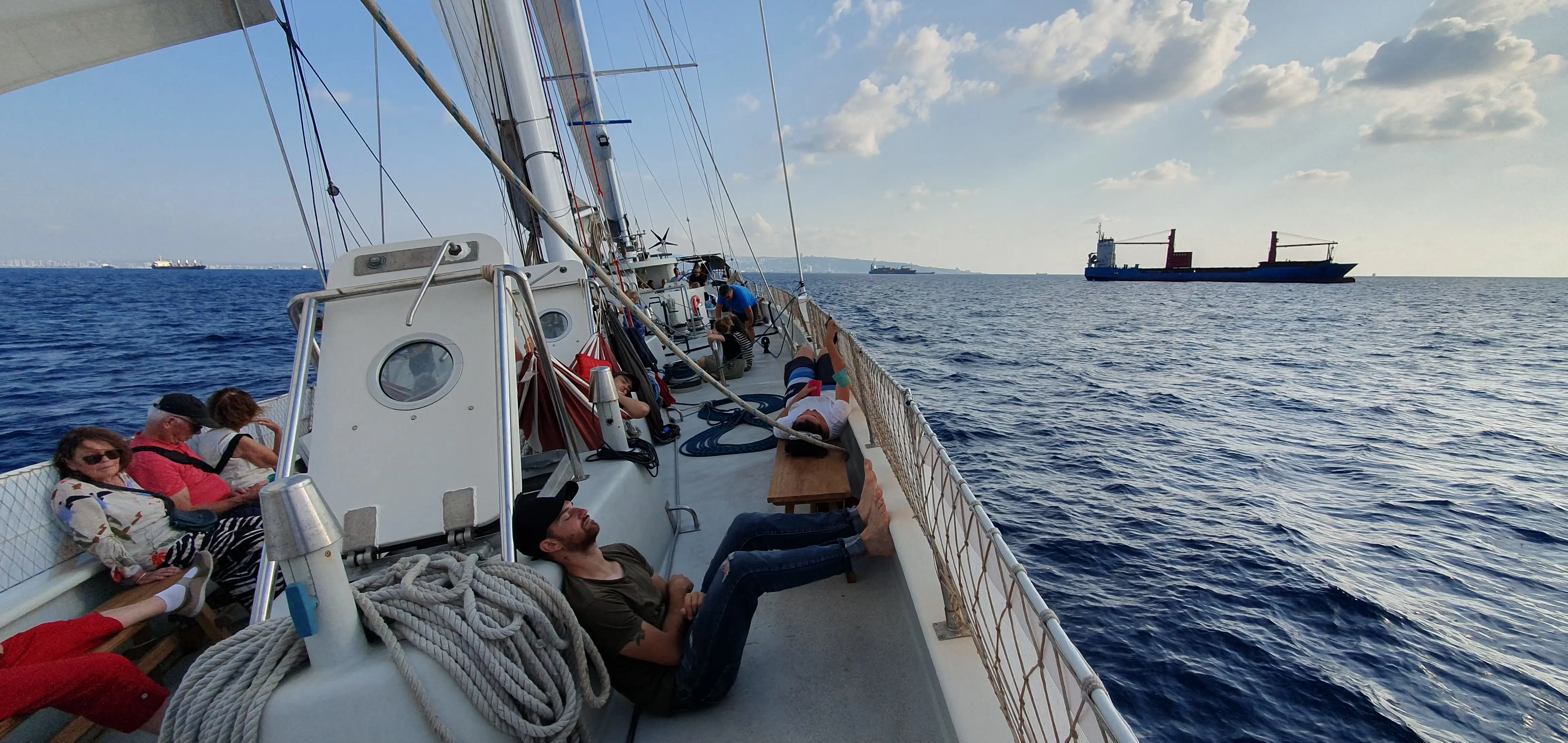
And then we came back.In February 2024, less than four months after leaving on that sailing ship, we returned. We have travelled to Israel every year since 2014 – and October 7 did not stop us. The same street, the same songs.
After October 7 we could have stayed away. That would have been exactly the wrong signal.
What that day left behind
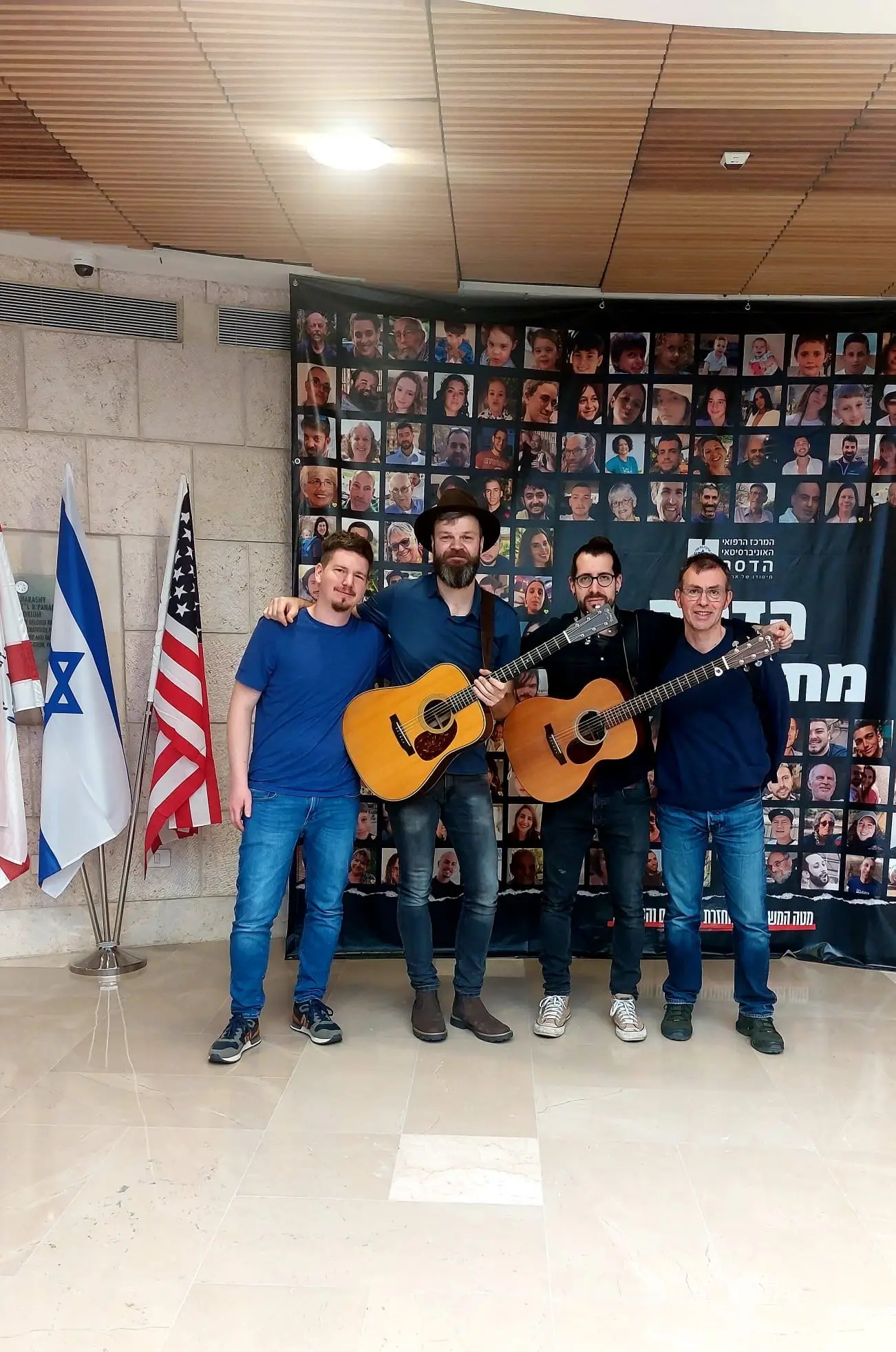
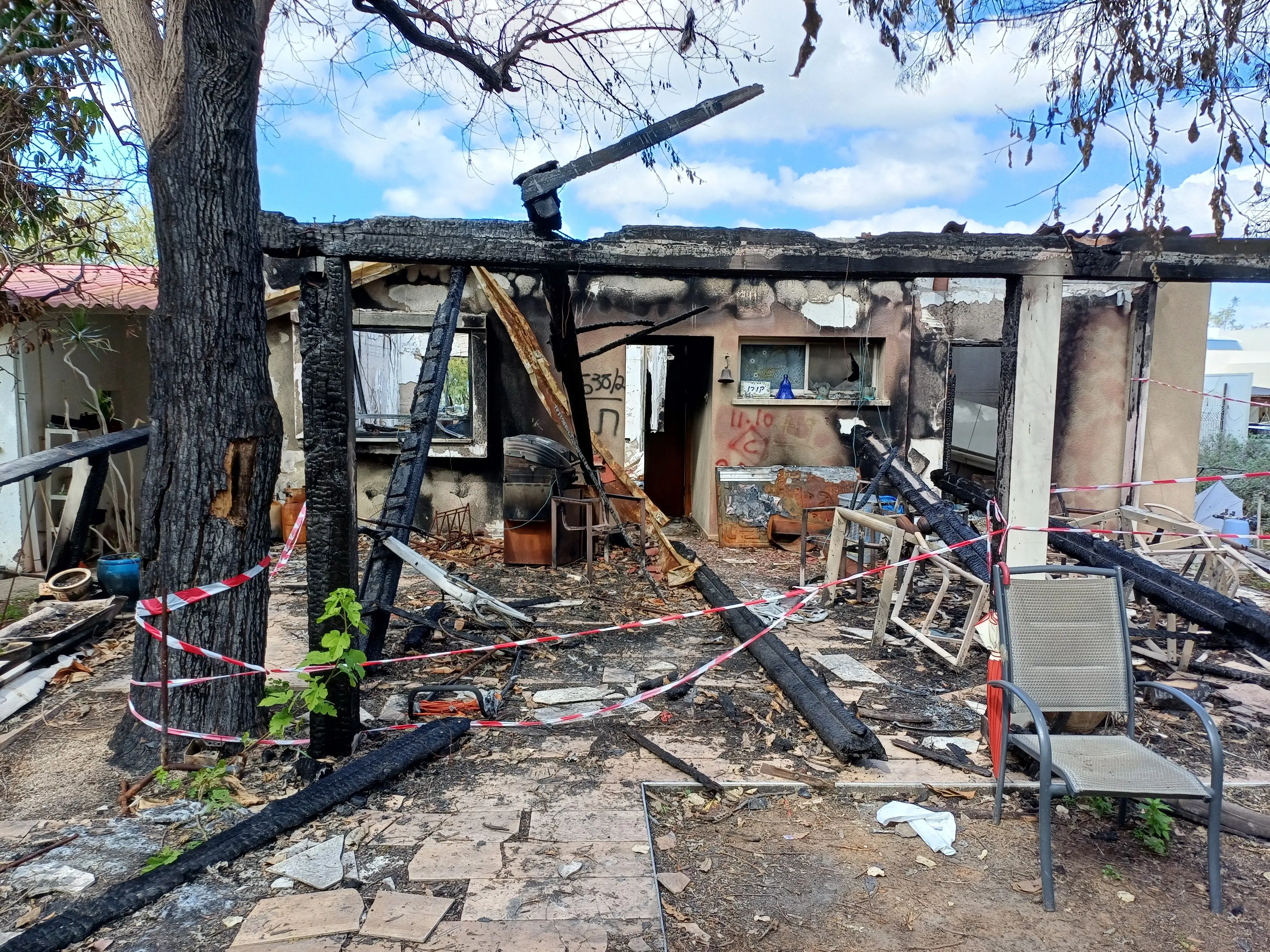
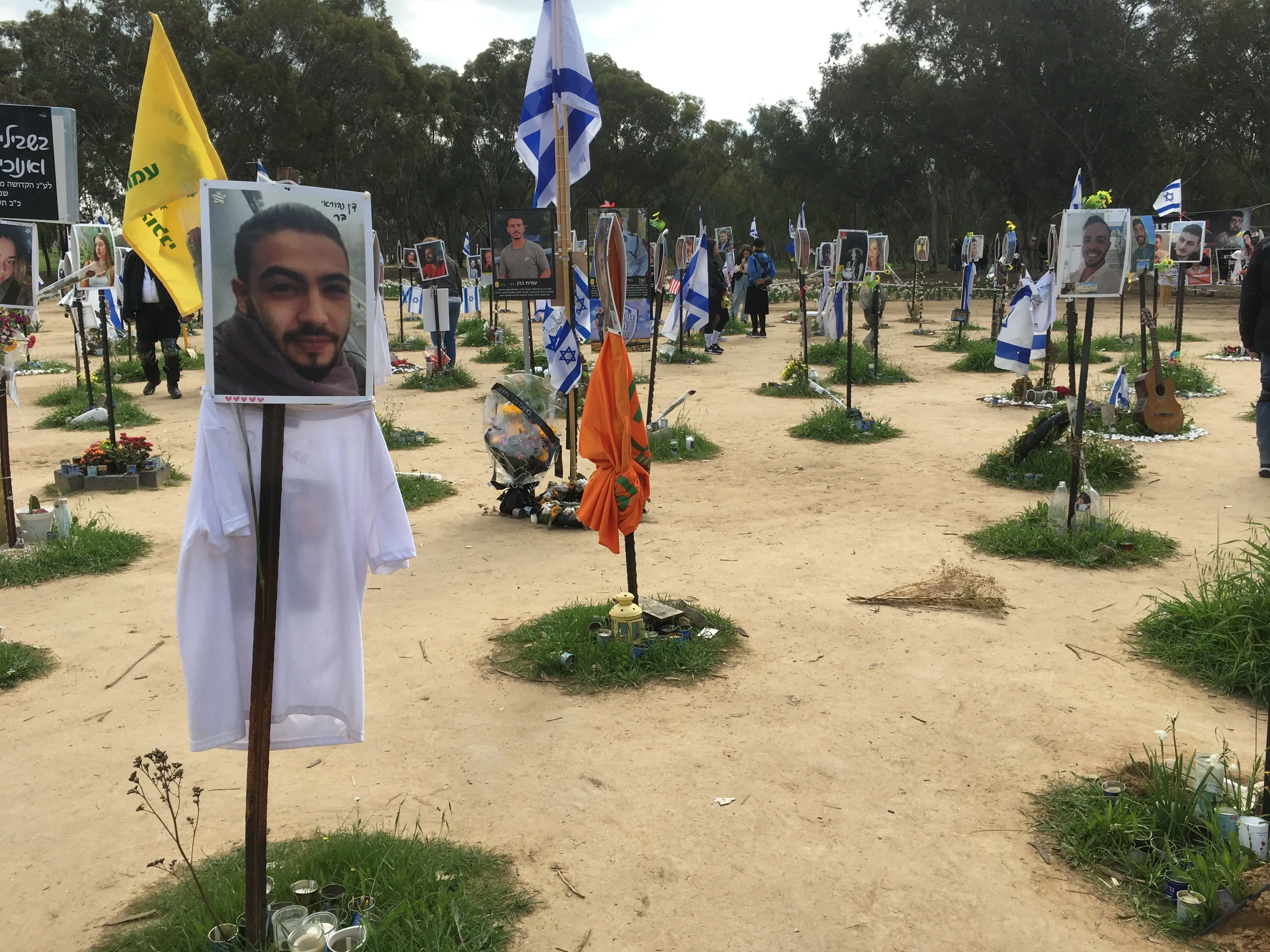
On that return we travelled to the south of the country. Destroyed homes, burnt-out vehicles, memorials to those who were murdered – there we saw what lies behind the news reports and numbers. Every name belongs to a person, a family and friends.
Watch
See for yourself what happens in the street
Two of our songs as music videos – and a report about the project from German television.
Clicking loads the video from YouTube. This transfers data to Google.
Choose a film:
Frequently asked
What people often ask us
Are you professional musicians?
No. Most of us have played music for many years, but nobody makes a living from it. Back home we have ordinary jobs and families – these trips happen during our holidays.
How long have you been coming to Israel?
Since 2014, every year. By now we are sometimes there several times a year.
Do you write the postcards yourselves?
Yes, every single one. Together with many friends in Germany we write 2,000 to 4,000 cards by hand every year. That is why every card is one of a kind.
Do you bring your instruments every time?
Yes. Instruments, amplifiers, the hand-written postcards and a fair amount of provisions all fly with us. By now we also have a small storage space in Israel where part of the equipment can stay.
Is this a political project?
No. We do not represent any party or take a political position on the conflict in the Middle East. Our concern is people: encounter, encouragement, and a clear no to antisemitism.
Who pays for this?
We do, for the most part. We take time off work for it. In the street in Israel we accept no money – we are not there to take anything.
Can we invite you?
Yes, gladly. It can be a talk, an evening of music and storytelling, a conversation or a workshop – whatever suits your group. We speak to Christian and non-Christian audiences, and to Jewish ones. Write to us and we will find the right format.
What does it cost to invite you?
Nothing. We do not charge a fee. If you would like to, you can make a donation towards the project – but it is not expected.
Can I come along? I am not a musician.
You do not need to be. About half of us do not play in the street at all – we talk with the people who stop and have questions. We travel at least once a year, mostly in autumn, sometimes more often, and we regularly bring new people with us. We deliberately do not list dates here – write to us and we will tell you when the next trip is.
Join us
Every encounter counts
Antisemitism does not shrink through silence. If you would like to support the project, invite us, or come along one day – write to us.
Write to usContact
Write to us
Whether you want to invite us, join a trip, or simply learn more – we are glad to hear from you.